Warren Buffett — Free Preview
Read the Introduction and first two chapters absolutely free. Discover how a child from Omaha became the most legendary investor in history.
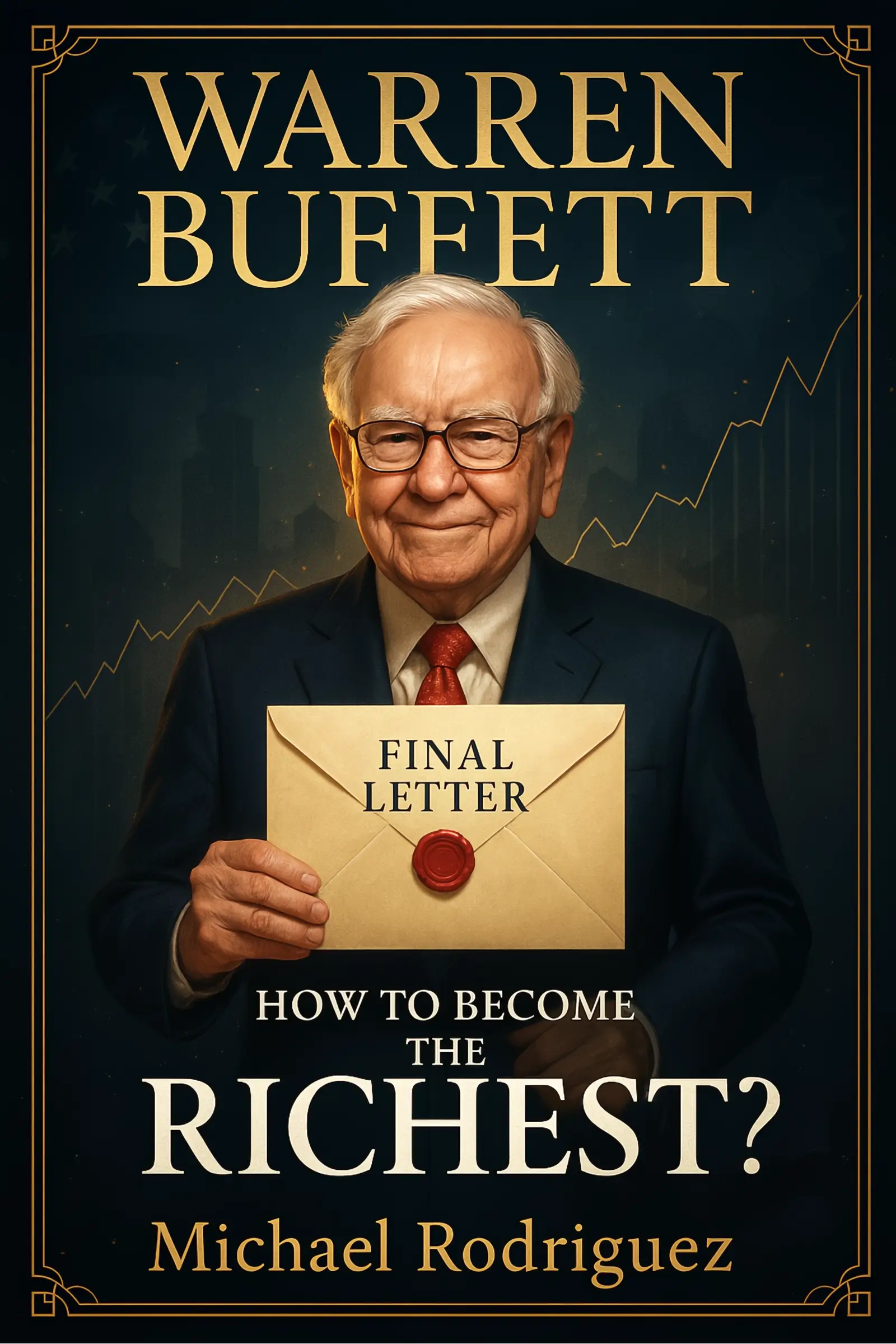
Introduction: The End of an Era
Unknown Pages from the Life of a Financial Genius
On February 22, 2025, Warren Buffett sends his annual letter to shareholders that literally shakes the investment world. This year, he announces his retirement and recommends Greg Abel for his position—a man who, truth be told, he has been preparing for this role for the past three years.
Although fund investors know well who Abel is, the market still reacts with a 5% drop in fund share prices. It would seem that Warren is now 95, he’s not eternal, Abel has long figured in reports and publicly as his right hand—a logical, predictable step with a margin of plus or minus a year.
Nevertheless, there’s a certain fact: Buffett’s departure is the departure of an entire era, and investors who withdrew their capital from the fund can generally be understood.
As you might have guessed, today we dive into the world of a phenomenon of a man—Warren Edward Buffett. In this book, I will tell you who stands behind his successes and failures, without whom life could have turned in a completely different direction. We’ll talk about what shaped him and what personal qualities allowed him to become one of the richest people in the world.
You’ll learn the main principles, tools, and strategies of his investing, discuss the mistakes that led to the formation of these principles, and what they cost him. We’ll touch on why, despite all the saintliness of our book’s hero that is broadcast through biographical sources, there are those who dislike him, consider him a hypocrite and manipulator.
At the end, we’ll talk about why there’s serious reason to believe that Warren is preparing for approaching danger, for a deep global crisis situation, and why his departure is a well-thought-out step and part of a big plan.
Chapter 1. Howard Buffett — The Father Who Laid the Foundation of the Empire
The twenty-ninth year of the last century was an extremely difficult time for America, a time when the Great Depression began. Millions of people then lost their jobs, homes, and savings. A twenty-six-year-old young man with a French surname was working as a stock broker at Union State Bank at that time. This refers to Howard Buffett, the father of our story’s hero.
In general, his affairs were going quite well until a certain point, because in the twenties America was experiencing rapid growth in the stock market, and this led to mass enthusiasm for investments. Many Americans then didn’t yet understand how to invest money wisely, but they really wanted to, so they actively took loans and went into debt for this adventure. Howard managed to earn quite well from this, but only until the so-called “Black Tuesday.”
On this day, to be precise October 29, the market crashed by $14 billion in one day. People began to surround banks hoping their money was there. Ten months after this fateful event, Warren Edward Buffett was born to Howard Buffett and Leila Stahl’s family in Omaha, Nebraska.
Jumping ahead, I’ll clarify that he was the middle son: he also had an older sister Doris and younger sister Roberta. It would seem that in this family, despite external circumstances, everything was working out not badly. But when Warren turns one, Howard goes to work as if nothing happened and discovers that his bank is closed—all due to the same inability to pay clients.
Birth of an Entrepreneur
Finding work was something from the realm of fantasy, but children somehow needed to be fed. Therefore, Buffett Sr. decided to open a brokerage firm with partners—Buffett & Company. A move, to put it mildly, contradictory: low demand for stocks, general distrust of banks, detachment from the gold standard—it was like selling fishing rods at an ice rink.
But Howard decided for himself that difficulties are the best time for new opportunities. And during financial panic, he somehow miraculously managed to successfully grow his company, relying on the trust of his clients, primarily, of course, friends and family. He offered them safe investment instruments such as utility stocks and municipal bonds.
This allowed his firm not only to exist but also to turn a profit in the first month of operation with $400 in commissions. To give you perspective—this was the cost of a used Ford in excellent condition at that time.
But that’s not the main thing. What’s important is that Howard began building a client base, following a conservative strategy. His confidence and stability distinguished him against the backdrop of surrounding chaos. “Even in those difficult times, we lived modestly but steadily moved forward,” Warren later recalled.
Political Career and Influence on His Son
Gradually, Howard achieved middle-class prosperity, then became interested in politics and became a member of the House of Representatives. Interestingly, Howard’s political views were quite radical for that time. He was a strict constitutionalist and libertarian, fighting against Roosevelt’s social programs and warning that government expansion undermines individual freedom.
In a newspaper article from May 1948, Congressman Buffett wrote: “In a free country, the monetary unit rests on the solid foundation of gold… independent of ruling politicians… if you are not prepared to give your children and your country to galloping inflation, war, and slavery, then this cause requires your support… we must win the battle to restore honest money.”
These views of his father undoubtedly influenced the formation of young Warren’s worldview, although the son never shared his parent’s extreme political positions. But he absorbed the main thing: distrust of government interventions in the economy and faith in the free market.
Upon completion of his political career, Howard returned to Omaha and worked at Buffett Folk and Company until the end of his days. This bright, quite successful life passed before Warren’s eyes and, of course, became an example for him.
“The best gift I received was having the father I had”—it was Buffett Sr., according to the official version, who played a key role in his son’s life as a mentor. They didn’t have warm family bonds with heart-to-heart conversations, but one didn’t exclude the other. Howard was able to be both support for his son and maintain a certain formality. Well, except they didn’t address each other formally.
That’s why Warren began earning and investing his funds from the earliest years. Today we’ll definitely talk about this, but before that I can’t help but mention the mother, whose role in Warren’s life—albeit not direct but indirect—is understated in biographical sources.
Chapter 2. Leila Buffett — The Mother Who Hardened His Character
Leila Buffett was known for her severity and quick temper. In his memoirs, Warren hinted that as a child he experienced fear before her. Sometimes she had uncontrollable outbursts of anger, and she could be very cruel and intolerant toward children.
If Warren received direct instructions from his father on how to live and what to do, with his mother he had to adapt and independently acquire skills that would later prove key in his career. It was precisely Leila’s behavior that formed Warren’s traits of caution, secrecy, and a deep need for inner independence. The whole point was to never again be vulnerable to anyone.
Contradictory Personality
It must be said that Leila was not just an unbalanced lady, but also quite a strong leader with a high level of organizational abilities. It was she who coordinated her husband’s first election campaign, as a result of which he became a member of the House of Representatives. And in general, she helped and supported Howard a lot throughout his life.
It’s also believed that it was Leila who instilled Warren’s love for mathematics and taught him to count when he was a child. “It started before I could remember. I just always felt good working with numbers, and I always played with them one way or another. I can still name what Omaha’s population was in 1930—214,600 people,” Buffett recalled.
In general, despite the fact that his mother was not an example of sensitivity and warmth for him, she still played a big role in key moments of his life. Warren himself in his speeches often recalls both parents with great reverence and notes that he was very lucky with them.
Formation of the Future Billionaire’s Character
As for our book’s hero, from early years he was a quiet, cautious, and at the same time curious child. His older sister Doris recalls that he never played football, didn’t cause mischief, tried to avoid conflicts with peers. He often played with his father’s adding machine and read books.
As he himself writes, he literally devoured trader columns in Barron’s weekly and absorbed books from the family library. This withdrawn but purposeful child already then demonstrated qualities that would later make him one of the greatest investors in history.
It’s interesting to note that Warren’s psychological portrait, formed in childhood under the influence of contrasting parental figures, largely explains his future investment style: from his father he inherited conservatism and caution, from his mother—analytical thinking and the need to control situations.
Want to read the full book?
The story continues with Warren's first stock purchases at age 11, his mentorship under Benjamin Graham, and the controversial decisions that made him the richest investor alive.
Subscribe to get exclusive updates on new investigations and special offers.